Biography Compiled by ChatGP | June 1, 2025
D.L. Moody: A Biography and His Writings on Christianity
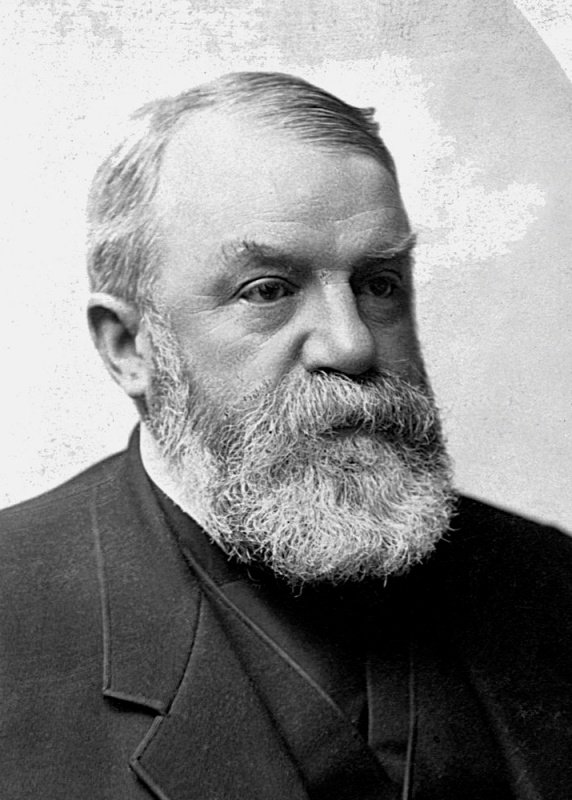
Dwight Lyman Moody (1837–1899), widely known as D.L. Moody, was one of the most influential evangelists and Christian leaders of the 19th century. Though he never received formal theological training and began life with little education, Moody’s passion for sharing the Gospel and his pioneering methods of mass evangelism left a lasting imprint on the modern evangelical movement. His legacy includes not only massive revival campaigns in America and the United Kingdom but also the founding of several key Christian institutions and a significant body of Christian literature.
Early Life and Conversion
D.L. Moody was born on February 5, 1837, in Northfield, Massachusetts, into a large family. His father died when Moody was only four years old, leaving his mother to raise nine children in poverty. Moody left home at age 17 to work in his uncle’s shoe store in Boston. It was there, through the witness of his Sunday school teacher Edward Kimball, that Moody experienced a profound conversion to Christianity in 1855. This moment transformed his life and set him on a course of tireless evangelism.
Ministry and Evangelism
Shortly after his conversion, Moody moved to Chicago, where he quickly became active in Christian work. He began by teaching Sunday school classes to impoverished children and soon developed a reputation for his energy, warmth, and concern for the poor. He established the Illinois Street Church, which would later become the Moody Church.
Moody’s work took on a new intensity during the Civil War, as he ministered to soldiers on both sides and developed a deep conviction about the eternal stakes of the Gospel. He later said that he resolved never to preach again without urging immediate decision for Christ.
In the 1870s, Moody partnered with singer and composer Ira D. Sankey, launching a series of highly successful evangelistic campaigns in the United Kingdom. These meetings drew massive crowds and helped ignite revival in cities such as London, Edinburgh, and Belfast. Moody’s style—earnest, direct, and filled with stories and Scripture—resonated with both working-class audiences and upper-class patrons.
Returning to the U.S., Moody conducted revival meetings across the country. His preaching was never theatrical, but always passionate and focused on the core Gospel message: the need for personal repentance and faith in Jesus Christ. He avoided complex theological debates and emphasized the love and mercy of God.
Educational and Institutional Legacy
Moody was also a visionary leader and institution builder. In 1879, he founded the Northfield Seminary for girls and later Mount Hermon School for boys in his hometown. These schools emphasized Christian character and education. More famously, in 1886 he established what would become the Moody Bible Institute (MBI) in Chicago, which remains one of the most respected evangelical training centers in the world.
He also helped launch Bible conferences and emphasized lay involvement in evangelism—training ordinary Christians, not just clergy, to spread the Gospel.
Writings and Publications
Though not a prolific academic writer, Moody authored or inspired numerous books, sermons, and tracts that captured his preaching style and core convictions. Many of his works were compiled from sermons or edited by others.
Some of his most influential writings include:
- The Overcoming Life (1896): This book reflects Moody’s pastoral concern with spiritual victory and growth. He teaches believers how to overcome sin, doubt, and fear through faith in Christ.
- Secret Power (1881): In this short but impactful book, Moody focuses on the person and work of the Holy Spirit. He emphasizes the necessity of the Spirit’s empowerment for Christian living and ministry.
- Sovereign Grace: A collection of messages emphasizing the grace of God in salvation, which counters any reliance on human merit.
- Heaven and Hell: Moody often preached about eternal realities, and these compilations offer a clear window into his convictions about the afterlife.
- Moody’s Anecdotes and Illustrations: Known for his storytelling, Moody frequently used vivid, relatable anecdotes to drive home theological points. These collected stories became powerful tools for evangelism and teaching.
Many of Moody’s works have remained in print and continue to be used by evangelicals for devotional reading, evangelistic training, and spiritual encouragement.
Theology and Emphases
Moody was theologically conservative but not dogmatic. He emphasized the authority of Scripture, the necessity of personal salvation, the return of Christ, and the indwelling power of the Holy Spirit. He avoided divisive doctrinal disputes and focused instead on the essentials of the Christian faith, especially justification by faith and the call to evangelize.
He also had a remarkable commitment to social ministry, caring deeply about the urban poor and the spiritual and material needs of the working class.
Legacy
D.L. Moody died on December 22, 1899, but his influence endures. Through the Moody Bible Institute, his published sermons, and the institutions he founded, his commitment to the Gospel continues to shape evangelical Christianity. His emphasis on practical ministry, personal piety, and evangelistic fervor made him a forerunner of modern evangelical missions and revivalism.
Moody proved that great theological impact does not require academic credentials, but rather a surrendered heart, deep compassion, and an unshakable trust in God’s power to change lives.
Would you like this adapted into a printable PDF, or paired with some quotes from Moody’s writings?
"; } ?>
Books By
D. L. Moody
Biography – Source
We asked an artificial intelligence tool to create these author biographies for use on Exchanged.Store. The AI used was ChatGPT. We created the biographies in June 2025 unless otherwise noted.
We cannot vouch for the accuracy of these profiles. But we want to provide our visitors with an opportunity to gain perspective on the background of authors that have affected so many on their Christian journey. If you find a glaring error in any biography, please let us know via our contact form.