Andrew Murray: South African Pastor and Revival Leader (1828–1917)
Andrew Murray was a prominent South African pastor, theologian, missionary, and author whose spiritual leadership and writings left a lasting legacy in Christian circles across the globe. Though sometimes mistakenly referred to as “Andre Murray,” his full name was Andrew Murray, and he became one of the most influential Christian figures in South Africa during the late 19th and early 20th centuries.
Early Life and Education
Andrew Murray was born on May 9, 1828, in Graaff-Reinet, a town in the Cape Colony of South Africa, which was then under British rule. He was the second child of Scottish missionaries Andrew Murray Sr. and Maria Stegmann Murray, both of whom were deeply involved in the Dutch Reformed Church. His father had come from Scotland as a missionary and played a foundational role in the spiritual development of the Afrikaner people in the Cape.
At the age of ten, Andrew and his older brother John were sent to Aberdeen, Scotland, for formal education, before continuing their theological studies at the University of Utrecht in the Netherlands. This rigorous training, steeped in Calvinist doctrine and classical theological study, helped form the intellectual and spiritual backbone of Murray’s future ministry.
Ministry and Revival Work
Andrew Murray was ordained in 1848 at the age of 20 and soon began ministering in Bloemfontein, a remote settlement in the Orange River Sovereignty (now part of the Free State province). At that time, the region was underdeveloped and spiritually dry, and Murray faced numerous hardships, including long distances, harsh conditions, and a largely indifferent population.
However, Murray was deeply committed to revival. In 1860 and 1861, a powerful revival swept through South Africa, particularly the Cape region, due in large part to the fervent prayers and preaching of Andrew Murray and others. These events are considered by historians and theologians to be among the most significant spiritual awakenings in South African history. Murray’s preaching style, which balanced theological depth with heartfelt appeal, was pivotal in sparking emotional and spiritual renewal, particularly among the Afrikaner population.
During this period, Murray developed a reputation not just as a pastor but as a revivalist. His teachings emphasized the indwelling of the Holy Spirit, the necessity of prayer, and absolute surrender to God. These themes would later become central to his writing.
Leadership and Institutional Development
Beyond his pulpit work, Andrew Murray was a strong advocate for Christian education and missionary training. In 1877, he became the minister of the Wellington Dutch Reformed Church in the Western Cape, where he would serve for the remainder of his life. There, he established institutions such as the Huguenot Seminary for Women and later the Huguenot College, both of which played vital roles in the education of women—a relatively progressive endeavor for the time.
He also helped found and support missionary organizations and theological schools to equip local believers for evangelism and pastoral ministry. Through these efforts, Murray contributed significantly to the intellectual and spiritual formation of the Dutch Reformed Church and the broader Christian community in South Africa.
Writing and Global Impact
Andrew Murray is perhaps best known today for his prolific writing, having authored more than 240 books, tracts, and sermons. His writings—clear, accessible, and deeply devotional—gained an international readership, and many remain in print to this day.
Among his most well-known works are:
- Abide in Christ (1855)
- Absolute Surrender (1897)
- With Christ in the School of Prayer (1895)
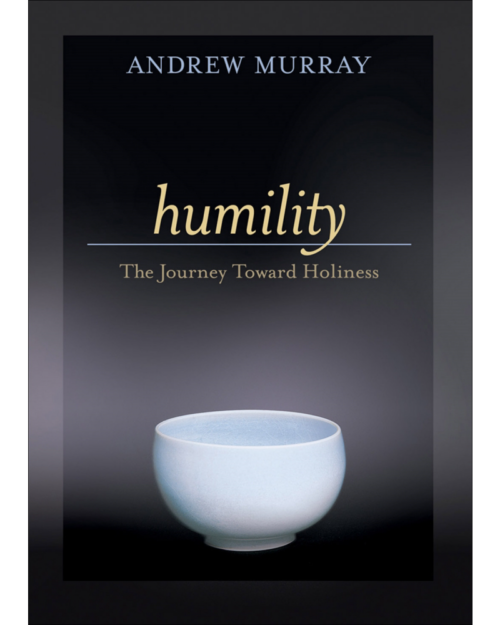
- Humility: The Beauty of Holiness (1896)
- The Spirit of Christ (1888)
These books helped spread his teachings on spiritual formation, prayer, and the Christian life far beyond South Africa. His influence reached into the broader evangelical and holiness movements in Europe and North America. Particularly notable is his role in shaping views on sanctification and the deeper Christian life, which resonated strongly with revivalist movements in the late 19th century.
Personal Life and Legacy
Andrew Murray married Emma Rutherford, a fellow missionary’s daughter, and together they had eight children. His personal life was marked by a quiet discipline, deep spirituality, and unwavering commitment to the ministry.
He continued preaching and writing well into his later years, until his death on January 18, 1917, in Wellington, South Africa, at the age of 88. By the time of his death, Murray had become a national spiritual figure and an international voice in Protestant Christianity.
Murray’s legacy endures not only through his writings but also in the institutions he helped build, the revivals he helped lead, and the lives he influenced. In South Africa, he is remembered as a pioneer of the evangelical faith and a bridge between European Reformed traditions and local Christian expressions. Internationally, his books continue to nourish the spiritual lives of countless Christians across denominational lines.
Conclusion
Andrew Murray was much more than a 19th-century pastor. He was a revivalist, educator, author, and visionary who believed deeply in the transforming power of God’s presence. His life exemplified a devotion to holiness, prayer, and service, and his impact—both in South Africa and around the world—remains significant even today.
Biography Compiled by ChatGP | June 1, 2025
"; } ?>
Books By
Andrew Murray
Biography – Source
We asked an artificial intelligence tool to create these author biographies for use on Exchanged.Store. The AI used was ChatGPT. We created the biographies in June 2025 unless otherwise noted.
We cannot vouch for the accuracy of these profiles. But we want to provide our visitors with an opportunity to gain perspective on the background of authors that have affected so many on their Christian journey. If you find a glaring error in any biography, please let us know via our contact form.